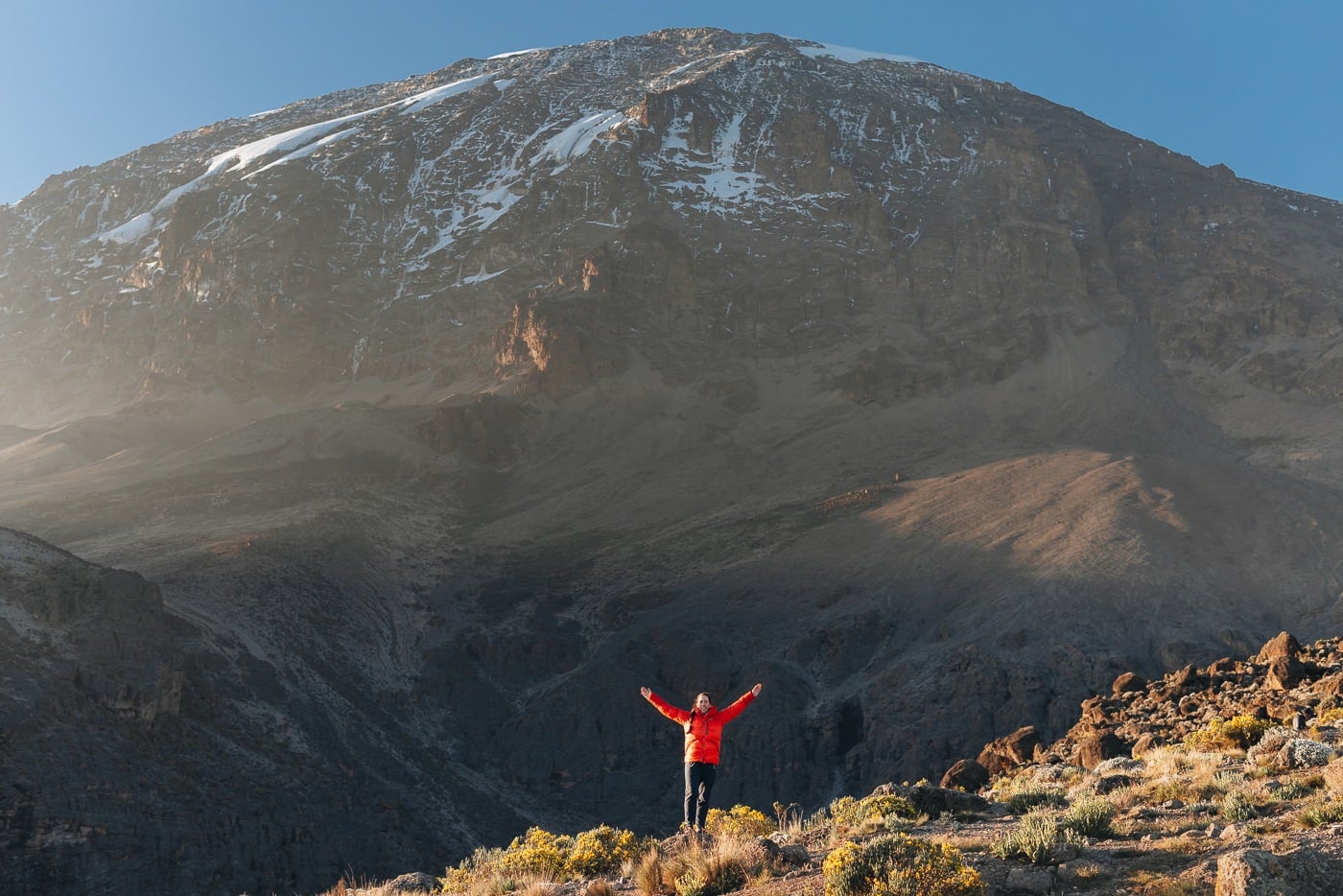


Mount Kilimanjaro is the world’s tallest freestanding mountain and the highest peak in Africa. The altitude alone makes finding the right Kilimanjaro climbing insurance one of the most frustrating parts of planning the trip. Just as you’ll find out on your trek, I didn’t use a single piece of technical gear on summit night (no crampons, no ice axe) – yet sorting coverage for 5,895 m still turned out to be one of the most expensive line items of the entire trip.
The problem is that most travelers assume a standard adventure travel policy will cover them. Almost every budget policy I checked either capped altitude at 3,000 m or buried an exclusion for “mountaineering” in the fine print, and at 5,895 m, Kilimanjaro triggers both.
In this guide I’ll break down exactly what I used for my Lemosho Route climb, what I researched and ruled out, and which options are worth considering depending on where you’re from– covering Global Rescue, World Nomads, Garmin SAR, and some other options for UK and EU climbers.
Why Your Standard Travel Insurance Won't Cover Kilimanjaro
The core issue is altitude. At 5,895 m (19,340 ft), Uhuru Peak sits above the coverage ceiling of almost every standard and budget adventure travel policy available.
I have a lot of experience with high altitude trekking insurance from multiple climbs and treks in Nepal and just like in the Himalayas, the most common cap for Tanzania trekking insurance I found when researching was 3,000 m (9,842 ft) on standard plans.
Yes, there are "adventure" upgrades typically extending that to 4,000 m or 5,000 m but it still leaves you uninsured for the entire trek in almost all policies as the wording (make sure you check it) is almost always "intend to go above X meters".
This means that if your itinerary lists Uhuru Peak as your destination, you are considered to be "intending" to travel above the policy's altitude limit from the moment you leave home, voiding your coverage for the entire trip.
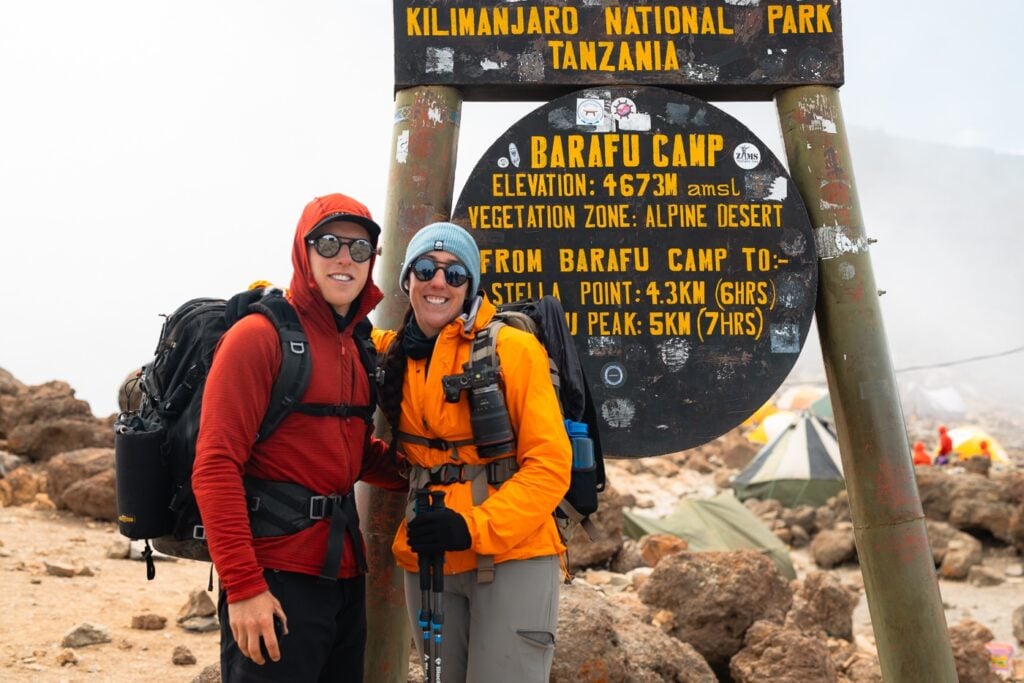
So no, from what I found in my independent research (you should do your own), one can't just pick 5,000 m trekking insurance and hope it'll cover you for most of the Kilimanjaro climb bar the last push from Barafu Camp (4,640 m).
When I booked my climb through Altezza Travel, they required proof of valid insurance before confirming my booking weeks before departure. A policy with a 5,000 m cap wouldn't have passed that check.
What I Looked For in a Kilimanjaro Insurance Policy
After going through this process for multiple treks and climbs in Nepal, I knew what to look for, but Kilimanjaro still threw up some surprises, mainly on cost.
These are the four things I checked for in every policy I researched and what I recommend that you check for your climb right now:
- Altitude coverage to 6,000 m or above: The policy must explicitly state coverage to at least 6,000 m (19,685 ft). A stated cap of 5,500 m is not enough, you need clear written confirmation that 5,895 m is covered.
- Correct activity classification: Even though I used nothing but trekking poles on summit night, some underwriters classify Kilimanjaro as "mountaineering" based on altitude alone. Check that your policy covers the activity as listed on your operator's itinerary, not just "trekking."
- Helicopter evacuation coverage: Tanzania's helicopter rescue infrastructure is far less established than Nepal's Khumbu region. There are fewer operators, longer response times, and costs that can hit $10,000–$15,000 USD or more depending on where on the mountain you need to be extracted from.
- Direct billing: This is the big one. A reimbursement model means you pay the helicopter company upfront (often $10,000+ in Tanzania) and claim it back later. In Tanzania, where operators are less familiar with foreign insurers than in Lukla or Kathmandu, direct billing is even harder to guarantee than in Nepal. I always look for a provider that pays the operator directly so I'm not wiring money from a tent at Barafu Camp.

The Kilimanjaro Insurance Options I Used and Researched
Below are the options I used and researched for my Lemosho Route climb. As an Australian, two of the most commonly recommended options for this altitude, BMC and True Traveller, were immediately off the table, which narrowed the field faster than I expected.
I've included them at the end of this section for UK and EU readers.
Tip: One thing worth clarifying before diving into providers: every standard Kilimanjaro route, Lemosho, Machame, Rongai, Marangu, Northern Circuit, is a non-technical trek. I used nothing but trekking poles all the way to Uhuru Peak on the Lemosho Route in June. The only exception is the Arrow Glacier Route, which is rarely attempted and requires special permits and technical gear. This matters for insurance because your activity classification - trekking versus mountaineering - directly affects what policy you need and what you'll pay for it.
Global Rescue: What I Actually Used
Global Rescue is what I used for my Kilimanjaro climb, and what I continue to use for all my high-altitude trips today from the Khumbu to the Karakoram.
It's worth being upfront about what Global Rescue actually is, because it's not a travel insurance company in the traditional sense. It's a crisis response membership, meaning it covers getting you off the mountain and to a hospital. It does not cover your baggage, your flights, or your medical bills once you arrive at the hospital.
The reason I choose it over everything else is direct billing. Global Rescue maintains pre-existing contracts with helicopter operators, meaning when you hit SOS they dispatch immediately so you don't need a credit card hold or a cash deposit. You also don't need to wait for a letter of guarantee to come through from a claims adjuster in another time zone.
Important: For Kilimanjaro specifically, the standard Global Rescue membership is not enough. Because the summit sits at 5,895 m, you are forced to add the "High-Altitude Evacuation Package" upgrade, which at the time of writing costs approximately $395 USD on top of the base membership fee (increasing in April 2026). For a single expedition this brings the total to around $535 USD which yes, stings for a trip where you're using trekking poles.
The other thing to factor in is the medical gap. Global Rescue gets you to the hospital in Arusha or Nairobi, but they will not pay the bill once you're there. I pair my membership with a low-cost medical-only policy. IMG Patriot Lite is what I've used to cover the actual treatment costs.
Global Rescue now offers IMG as an add-on at checkout, which makes this straightforward.

World Nomads: the best all-in-one alternative
World Nomads is the most practical all-in-one trekking travel insurance option for Kilimanjaro, and the one I'd point most first-time high-altitude trekkers toward if they want baggage, cancellation, and medical expenses bundled into a single policy.
The critical thing to get right is plan selection. The Standard Plan typically caps trekking at 3,000 m (9,842 ft), which covers you for nothing on Kilimanjaro, not even the rainforest section on Day 1 if your itinerary lists the summit. You must select the Explorer Plan, which at the time of writing covers trekking up to 6,000 m (19,685 ft), clearing Uhuru Peak at 5,895 m with just enough room.
The main trade-off compared to Global Rescue is the pay-and-claim model. World Nomads operates on reimbursement, meaning if you need a helicopter off the mountain, you or your guide will likely need to provide a deposit or credit card hold before the pilot agrees to fly, then claim it back afterward. In Nepal's Khumbu for treks like The Three Passes, Everest Base Camp, or even climbs like Island Peak and Mera Peak, helicopter operators are very familiar with foreign insurers which means a delay is manageable. In Tanzania, where the rescue infrastructure is thinner and operators are less likely to recognize your insurer's name, it's a bigger risk.
The upside Global Rescue can't match is trip interruption coverage. If you get weathered in somewhere, or need to cancel before departure due to illness, World Nomads can cover those costs. In my experience the extra nights in Arusha are cheap enough that this rarely justifies the trade-off on its own but for first-timers who want full coverage under one policy, it's a legitimate reason to choose it.

Garmin SAR: Good for many trips but skip it for a single Kilimanjaro trek
I used to recommend Garmin's SAR insurance constantly. For around $40 a year it was genuinely one of the best value options for high-altitude coverage if you have an inReach device and I used it myself for years on treks in Nepal.
Those days are gone. Garmin overhauled their pricing structure and the affordable plans now explicitly exclude any trip where you intend to go above 5,000 m (16,404 ft). Since your Kilimanjaro itinerary lists Uhuru Peak at 5,895 m, the cheaper SAR 100 ($39.99/year) and SAR High Risk ($299.99/year) plans are both void from day one.
To be covered for the summit, you need the SAR High Altitude plan, which now costs $999.99 per year. For a professional mountaineer doing six or seven high-altitude expeditions a year, that math works out. For someone climbing Kilimanjaro once, it doesn't come close to justifying itself against Global Rescue. It's also a reimbursement model, so you'd still be fronting the helicopter deposit yourself anyway.

True Traveller or BMC: best options for UK and EU climbers
As an Australian I couldn't buy either of these, but both came up repeatedly in my research and the policy wording I read for both was some of the clearest I found for this altitude.
True Traveller requires the Extreme Adventure Pack, which explicitly covers trekking above 4,600 m and lists peaks like Kilimanjaro by name. It's a full all-in-one policy covering medical, cancellation, and baggage, the closest UK equivalent to World Nomads Explorer Plan, but with better altitude wording in my opinion.
The British Mountaineering Council (BMC) Alpine & Ski tier covers mountaineering up to 6,500 m, which clears Uhuru Peak comfortably. You need a BMC membership to buy it, but membership is affordable and the policy is written by people who understand the difference between a trekking peak and a technical climb. UK-based professional guides I've spoken to recommend it consistently.
Neither of these is available to Australian, US, or most non-European passport holders. Check eligibility before you spend time reading the PDS.
Does Kilimanjaro require proof of insurance to climb?
Yes, and it's enforced earlier in the process than most people expect. When I booked my Lemosho Route climb with Altezza Travel, insurance documentation was required during the booking process.
This matters because it gives you no room to sort a policy last minute. If your documentation shows an altitude cap below 5,895 m, a reputable operator will flag it and ask you to get the right coverage before they confirm your place on the expedition.
The practical advice here is: sort your insurance at the same time you book your operator. Check that your policy confirmation letter or membership certificate explicitly states the altitude coverage. Vague wording like "high altitude trekking" without a specific meter figure is not enough: typically in my experience the "reputable" operators needs to see a number.
Is Kilimanjaro Technical Mountaineering or Trekking?
This caught me off guard when I was researching policies for Kilimanjaro, even after years of sorting insurance for technical climbs in Nepal.
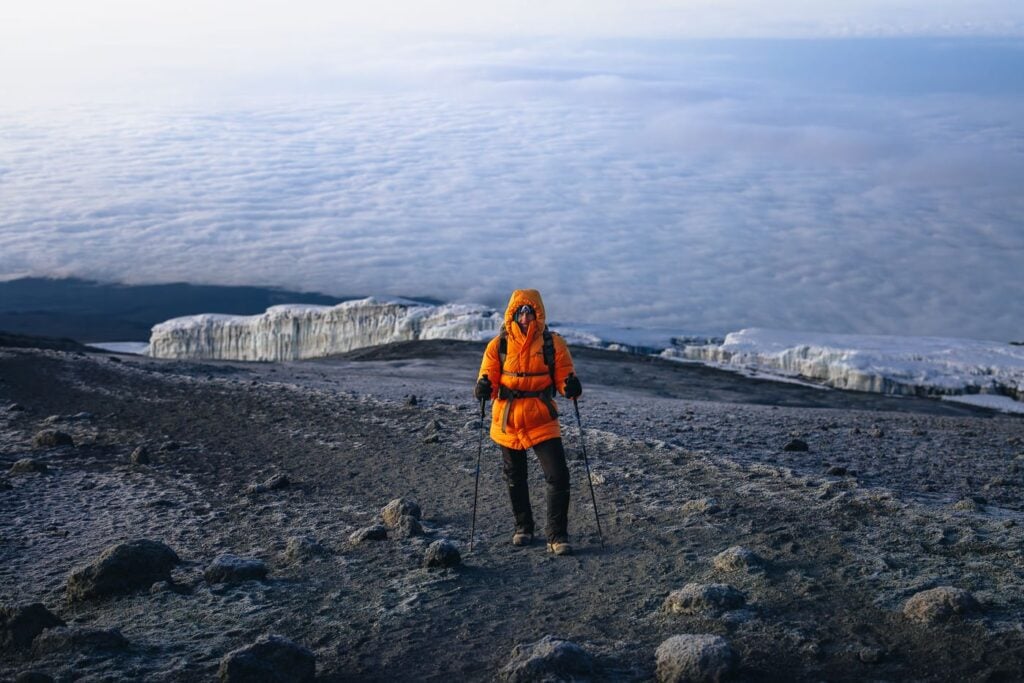
On every standard Kilimanjaro route, you are trekking. I reached Uhuru Peak on the Lemosho Route in June using nothing but trekking poles. This means no crampons or ice axe. There were not even any fixed lines so we didn't need a harness.
The reality is, if you're going to Tanzania to climb Kilimanjaro, no matter what route you take, the mountain is essentially a long, high-altitude walk. That's not to say it's easy, but it's not a techincal peak by any means.
The problem is that some underwriters don't see it that way. A handful of policies I reviewed during my research classify any activity above a certain altitude (sometimes as low as 5,000 m) as "mountaineering" regardless of the equipment used or the technical difficulty of the route.
If your policy excludes mountaineering and an insurer decides Kilimanjaro qualifies, your claim can be denied.
The fix is straightforward: I recommend that you right now read the activity definitions section of the PDS. You want a policy that either explicitly lists Kilimanjaro or defines covered activities by equipment and technical difficulty rather than altitude alone.

My Verdict — What I'd Use Again For Kilimanjaro
My personal choice is Global Rescue paired with IMG Patriot Lite for medical coverage, and that's what I used on my Lemosho Route climb.
The cost is the hardest part to swallow. For a trek where you're wearing trail runners and carrying trekking poles, paying $535+ for rescue coverage feels steep. But Tanzania's rescue infrastructure is thin, helicopter costs are high, and I'm sure I don't have to tell you that direct billing model is worth every dollar if you actually need it.
Alternatively, first-time Kilimanjaro climbers who want everything under one policy, World Nomads Explorer Plan is the most practical alternative. Just go in knowing you may need a credit card with a high limit available if a rescue situation unfolds on the mountain.
One final thing: the operator you book with is likely more important than your insurance.
On my Lemosho Route climb, our Altezza guides performed twice-daily oxygen saturation checks from Shira Camp onward. On summit night, one member of our group was showing readings that concerned the guides enough to monitor her closely all the way to Stella Point. She summited fine, but watching that situation unfold at 5,500 m in the dark, hours from the nearest road, was a sharp reminder of why this coverage matters.
Sort your insurance before you sort your gear. Speaking of gear - if you're still building your kit for the climb, our Kilimanjaro packing list covers everything I brought on the Lemosho Route and what I wish I didn't.
I'm a traveler, not an insurance broker or financial advisor. Policy terms, altitude caps, and pricing change frequently. Read the full Product Disclosure Statement and verify coverage for your nationality and itinerary before purchasing.