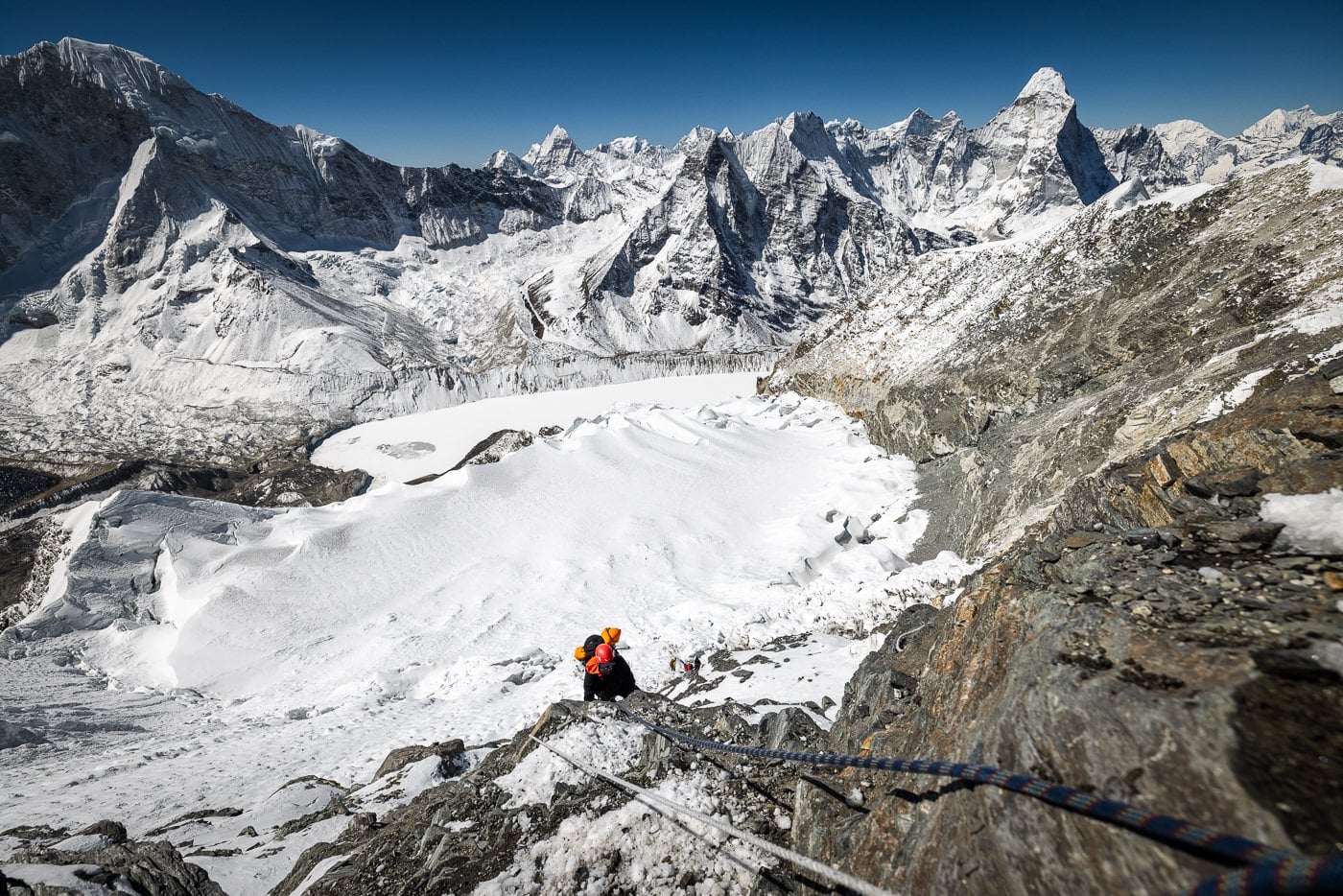


Island Peak, known in the Himalayas as Imja Tse, is a 6,189 m (20,305 ft) introduction to Himalayan mountaineering. When I climbed it, I found navigating the ladder crossings over the Imja Glacier and jumaring up the final ice headwall far more physically demanding than my ascent of Mera Peak.
Before I even began the trek from Lukla, I got stuck on trying to find suitable trekking, expedition, or climbing insurance that would cover me in case of a rescue or accident on the mountain. What I discovered was because of some semi-technical sections and an altitude above 6,000 m, all the standard travel insurance policies I compared were completely useless for this expedition.
As it turned out, finding insurance that covers the Island Peak expedition was one of the most expensive parts of the trip!
After seven years of climbing and trekking in Nepal, I learned a thing or two about how strict these fine-print exclusions can be. Below I’ll give you a rundown of my experience finding mountaineering coverage that is suitable for Island Peak, and some information about what I currently use for similar trips today.
Note: I am a full-time traveler and adventure photographer, not an insurance broker. Policies change frequently, so you must verify the specific fine print for your nationality before flying to Lukla. This is not financial/insurance advice.
Overview: Island Peak Stats & What I Look For in a Policy
Island Peak is located in the Chhukung Valley of the Everest (Khumbu) region. While it is often the first "big" mountain for aspiring mountaineers, the logistics are a significant step up from a standard trek. Because you are essentially climbing a 6,189 m (20,305 ft) peak using technical safety systems, your insurance needs to bridge the gap between "high-altitude hiking" and "expedition climbing."
- Altitude: 6,189 m (20,305 ft). Most policies void at 6,000 m, making this height a critical insurance threshold.
- Semi-technical. Requires the use of a Jumar (ascender) on fixed lines, crampons, and roped glacier travel.
- Typically 14–18 days from Kathmandu. Insurance must cover the entire period, including the trekking approach and summit push.
- Location: Remote Khumbu Region. Evacuation is by helicopter only; there are no roads.
- Cost: Expeditions range from $1,800 to $4,500. Ensure your policy covers "Trip Interruption" to protect this investment.
- Difficulty: Physically demanding (Grade PD+). It is tougher than Mera Peak due to the steepness of the final headwall.
- Mandatory Gear: 6,000 m-rated double boots, harness, helmet, and crampons. Many insurers exclude claims involving this "specialized equipment."

Is Island Peak Considered "Technical Mountaineering"?
At 6,189 m (20,305 ft), Island Peak (Imja Tse) is frequently labeled a "trekking peak," but this term is a dangerous trap when it comes to insurance. While the approach follows the standard Everest Base Camp route, the summit day is a 10–14 hour mission that in my opinion crosses the line into technical mountaineering.
The truth is, when it comes to buying trekking/climbing insurance, the only definition that matters is that of your chosen insurance provider. So it's important to check with them.
During my climb, I found that "trekking" ended the moment we reached the Crampon Point at 5,800 m (19,028 ft) on the summit day. From there, the terrain requires specific technical skills that, after reviewing tonnes of policies, standard travel policies explicitly exclude including:
- Fixed Rope Work: You will use a Jumar (ascender) and a mountaineering harness to navigate the multi-pitch headwall.
- Glacial Traverse: Crossing the Imja Glacier requires being roped to a team and using aluminum ladders to span deep crevasses.
- Technical Gear: You are required to wear 6,000 m-rated double boots, crampons, and a helmet.
For many people, this might not seem like full-scale mountaineering. But remember, you are in a high altitude environment in a developing nation, underwriters see this as a very dangerous activity.
Quick answer: Yes, most insurance companies treat Island Peak as a mountaineering expedition. Simply looking for high altitude travel insurance that covers trips above 6,000 m is likely not enough for an Island Peak climb. You'll need to really read all the fine print to ensure a policy doesn't strictly prohibit any words similar to "organized expeditions" or the use of "specialized climbing equipment" such as fixed ropes and ascenders, etc.

The Best Expedition Insurance for Island Peak (My Picks)
Finding the right coverage for a 6,189 m (20,305 ft) peak that involves fixed ropes is a narrow target. Most "adventure" policies stop exactly when the intent of a trip is to go above 6,000 m, making them void even before you step onto the Island Peak summit ridge!
Based on my expeditions and research into the latest policy updates, here are the only providers I currently trust for my climbs. Note, you'll need to do your own research here as the conditions may be different for you, and these rules change literally every year.
| Provider | Best For | Altitude Limit | Direct Billing? | Technical Climbing Covered? |
| Global Rescue Top Pick | All Nationalities (Rescue Only) | Unlimited (with upgrade) | Yes (Best in Nepal) | Yes (Fixed ropes & crampons) |
| True Traveller | UK & EU Residents | Unlimited (Extreme Pack) | Varies (Reputed) | Yes (Includes Mountaineering) |
| BMC | UK Residents (Members) | 6,500 m (Alpine & Ski) | Yes (High Trust) | Yes (Built for climbers) |
| Garmin SAR | InReach Users (High Cost) | Unlimited (High Altitude) | No (Pay & Claim) | Yes (Professional grade) |
My Current Top Pick: Global Rescue + IMG Medical
This is currently my top pick and what I personally use for all my high-altitude trips from the Karakoram to the Khumbu.
First thing to note is Global Rescue is not a regular travel insurance company; it is a "crisis response membership." But realistically, personally this is what I prefer for expeditions, to know that you are for evac if something goes wrong.
This is the company I used for my climb of Island Peak. In the past I've relied on them for a bunch of other climbs and treks in Nepal too because they have pre-funded relationships with major Nepali pilots like Simrik Air and Kailash Helicopter. This means if you ever have to call SOS, they'll dispatch a helicopter immediately without demanding a $5,000–$10,000 credit card deposit on the mountain.
However, the "Standard Membership" is no good for Island Peak as it caps at 4,600 m (15,000 ft). You must buy the "High-Altitude Evacuation" upgrade. This add-on currently costs about $395 USD, but it’s the only way to be contractually covered for a rescue from the summit ridge.
Remember, this is an evac policy only. Global Rescue only pays to get you to the hospital. They do not cover your actual doctors' bills once you land in Kathmandu. To fix this, I always pair it with a cheap "medical-only" policy like IMG Patriot or Signature. This usually costs an extra $60–$100, but it covers the high-end clinics like CIWEC Hospital where you'll want to be treated.

True Traveller (Only for EU/UK Residents)
As an Australian, I personally don't have access to this provider, but it was recommended to me by several European and British climbers I met in the Khumbu. After digging into their current policy documents, it’s easy to see why.
Unlike many generic insurers that use vague language, True Traveller has some of the clearest definitions for high-altitude activities I’ve seen. For a peak like Island Peak, you must select the "Extreme Adventure Pack."
Here is why this plan may work well for an Island Peak expedition:
- While their standard plans cap out early, the Extreme Pack specifically extends coverage to unlimited altitudes for trekking.
- This tier explicitly covers "Mountaineering to 6,000 m" including the use of ropes, picks, and specialized climbing equipment. Even though Island Peak sits slightly above this at 6,189 m, their 2026 wording lists Island Peak and Mera Peak insurance coverage by name as covered under the "Trekking" category with this pack, which makes it win for clarity but I'd still check this with them before departure.
- This is a full travel insurance policy. It includes up to £10 million in medical and repatriation cover, plus options for baggage and trip cancellation.
The main advantage here is the "all-in-one" nature of the policy, which saves you from having to double-up on separate medical and rescue plans. However, keep in mind they typically operate on a reimbursement or pre-authorized model, so you should still have a way to access funds if a helicopter pilot demands an upfront deposit.

British Mountaineering Council (BMC - UK Residents Only)
I'm kind of jealous of the Brits, not for their weather or their food, but for the BMC. If you are a resident of the UK, the British Mountaineering Council (BMC) is often considered the gold standard. Unlike generic insurance companies that will work hard to exclude Island Peak the BMC was built by climbers, for climbers and will cover the climb.
I’ve met countless British mountaineers in the Khumbu who swear by the BMC because their underwriters actually understand the difference between a "trek" and a "technical ascent."
For Island Peak, you must select the "Alpine & Ski" policy. Here is why it's a perfect match for this trip:
- This policy covers you for peaks up to 6,500 m, which comfortably clears the 6,189 m summit of Island Peak.
- It explicitly covers the use of specialist equipment, including ropes, jumars, and crampons.
- Their current policies at time of writing include £100,000 for search, rescue, and recovery. In the Nepal Himalayas, this is very important.
Note you have to be a BMC member to purchase the policy. Currently, an individual membership costs roughly £42, but the discount you get on the insurance premium (and the 15% discount at shops like Cotswold Outdoor) usually makes up for the cost.
Garmin SAR (For InReach Users)
I used to recommend the Garmin "SAR 100" plan as a cheap safety net for climbers and adventurers who have an InReach device. While it's still an option, the cheap days are officially over. Garmin has overhauled its structure this year and the affordable plans now strictly exclude any trip with an "intent to go above 5,000 m." Since Island Peak is clearly over 6,000 m, those $40 plans are no good.
To be covered, you now have to buy the "SAR High Altitude" plan, which costs $999.99 USD per year currently. In my opinion. unless you are a regular mountaineer or planning three or more 6,000 m expeditions in a single year, this is now much worse value than Global Rescue.
Plus, it remains a reimbursement-only model, meaning you’ll still likely need to front the cash for a helicopter in a crisis. That said, Garmin's support team is one of the best in the business. I'm yet to have to hit SOS on my device, but it's good to know they exist.

Conclusion: Don't Leave Your Rescue to Chance
Climbing Island Peak was one of the most rewarding mountaineering challenges to date, because it was the one that propelled me into the world of high altitude expeditions. However, even today I wouldn't do a climb like this without buying insurance for Island Peak.
Whether you choose the Global Rescue + IMG combo or a specialist policy like BMC, a little tip I advise is to ensure you have your policy details saved offline on your phone and a printed copy in your duffel!
The reality of the Himalayas today is that the rescue industry is stricter than ever. If you don't have the right paperwork, you're risking a massive heli bill. Do the work now, read the fine print, and good luck on your expedition!
