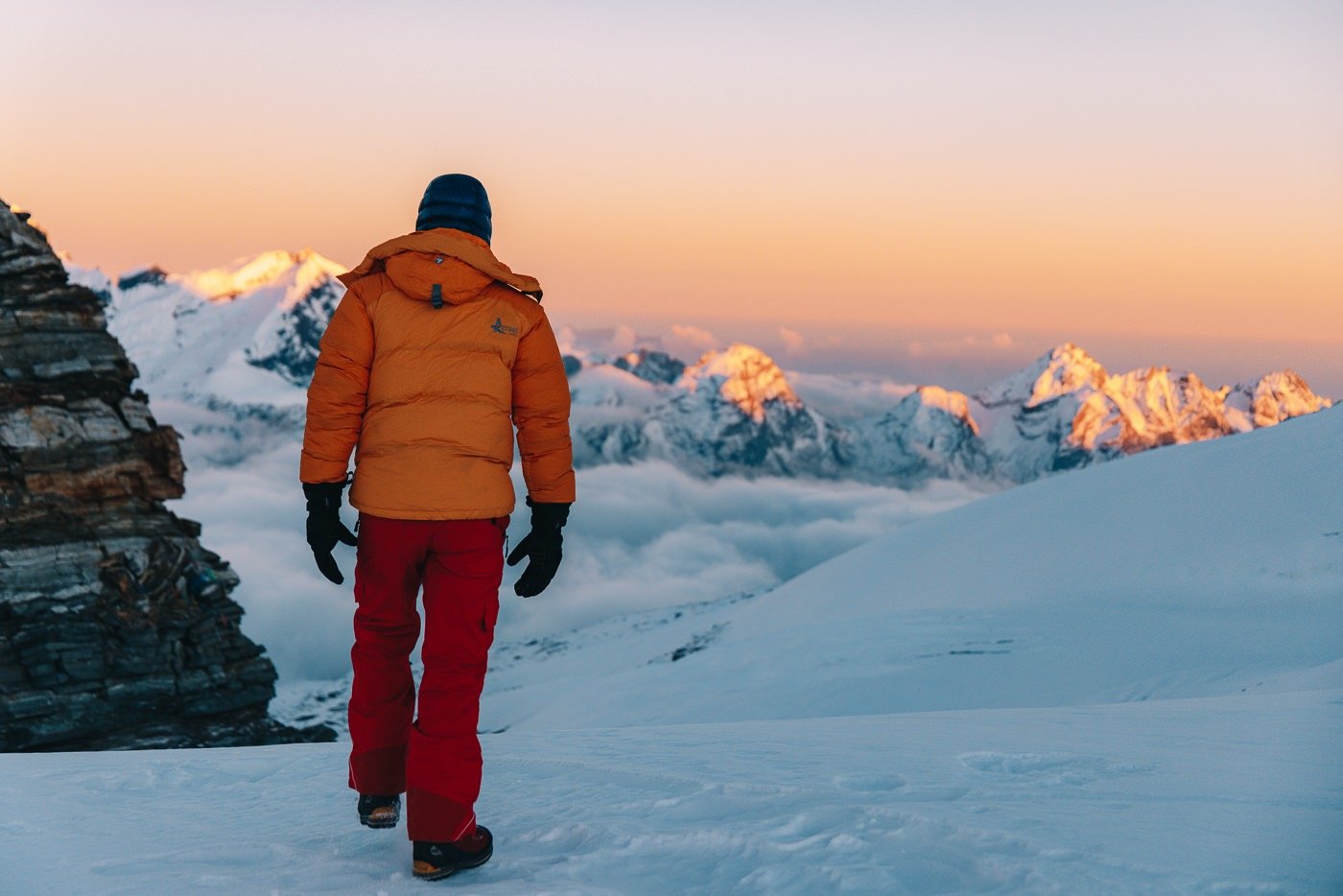


Mera Peak is widely known as the highest trekking peak in the world. While you don’t need any super technical gear to make it to the summit, the height alone – 6,476 m (21,247 ft) means it sits well above the coverage limit of almost every standard travel insurance policy.
When I climbed Mera Peak, I tried to do it on a backpackers budget, and since I never travel or trek anywhere uncovered, I quickly realized specific trekking travel insurance covering Mera Peak was one of the most expensive parts of the experience!
In this guide, I’ll share my experience with travel insurance for Mera Peak, what I used, what the options are today, and what I continue to use for other high altitude treks and climbs in Nepal, the Karakoram, and beyond today.
Overview: What I Discovered About Insurance for Mera Peak
The first thing I found about was that you generally cannot buy regular travel insurance and expect to be covered in remote, high-altitude locations like the Himalayas. Almost every standard provider I have ever checked has a low altitude ceiling, often as low as 3,000 m, which excludes these regions entirely.
To fix this for most treks in Nepal, I found I was either looking for dedicated high altitude trekking insurance, or regular plans upgraded to a dedicated "Adventure Plan" or purchase a "High Altitude" add-on. These policies usually cover trekking up to 6,000 m (19,685 ft), which is perfectly fine for popular routes like Everest Base Camp, the Three Passes, or the Manaslu Circuit.

However, Mera Peak is an entirely different beast.
Due to the altitude alone, 6,476 m (21,247 ft), it sits well above the 6,000 m limit that caps most "Adventure" policies. If you attempt the summit with a standard trekking policy, you are likely uninsured for the most dangerous section of the climb. What I discovered was that I needed to compare insurance offerings that explicitly cover "Mountaineering" or activity above 6,000 m.
Here's what I looked for:
- Altitude: The policy must explicitly state coverage up to 6,500 m or 7,000 m (standard 6,000 m plans will not work).
- Activity: Ensure "Mountaineering" (using ropes and crampons) is covered, not just "Trekking."
- Helicopter Evacuation: Look for "Search and Rescue" (SAR) coverage and it's a good idea to ensure it includes "Direct Billing" to avoid paying cash upfront.
- Direct Billing: Verify if the insurer pays the helicopter company immediately, so you aren't stuck paying a $5,000+ deposit.
Note: I am a traveler, not an insurance broker or financial advisor. The information in this guide is based on my personal experience climbing in the Himalayas. Insurance policies, altitude caps, and rescue protocols change frequently. I did not have to make a claim on Mera Peak, so I cannot vouch for the claims process of these specific providers. You must read the full Product Disclosure Statement (PDS) and verify coverage for your specific nationality and itinerary before purchasing.
My First Option: Global Rescue
This is what I actually used when I climbed Mera Peak, and what I continue to use for treks and climbs in Nepal and elsewhere.
Global Rescue is not a regular travel insurance company. It's not even a trekking insurance company, and in many ways, I wouldn't even consider it an insurance company at all.
However, I figured what I really needed on Mera Peak was "evacuation and rescue coverage", and that's exactly what Global Rescue offers.
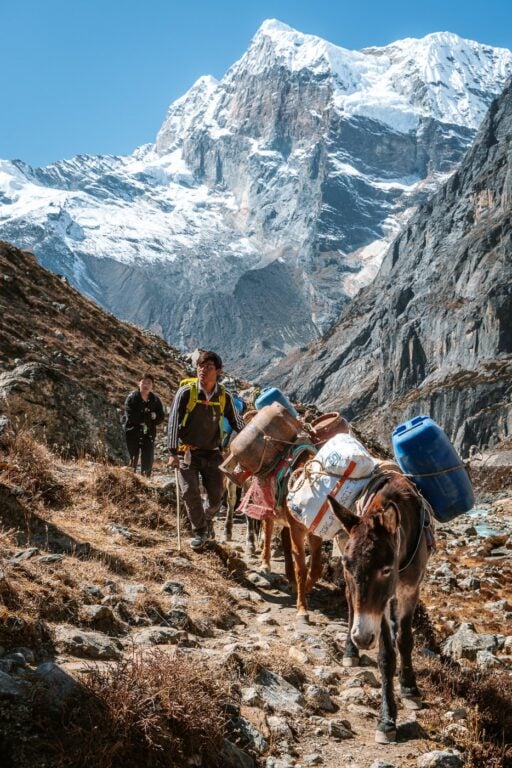
The main reason I rely on them specifically for Mera Peak is the geography of the Hinku Valley. Unlike the Everest Base Camp trail, where you are never far from a busy village, the walk to Mera is incredibly isolated. If things go wrong at Khare (5,000 m) or High Camp (5,800 m), you are days away from the nearest road.
In that situation, I don't want to be negotiating with a claims adjuster. I want a company that has the power to dispatch a helicopter immediately. Global Rescue has pre-funded relationships with the pilots in Lukla and Kathmandu, meaning they don't wait for a credit card hold before they fly.
The catch is that this level of security is expensive. Because Mera Peak is 6,476 m, it exceeds their standard membership cap of 4,600 m. You are forced to buy the "High-Altitude Evacuation" upgrade. This adds about $395 USD to the cost, which hurts the wallet, but it’s the only way to be contractually covered for a rescue from the summit ridge.
Just remember: this is strictly for transport. If you get flown to a hospital in Kathmandu, Global Rescue will not cover you after that. However, that's why I always buy a cheap "medical-only" policy (like IMG) to cover the actual doctors' bills. You can get this as an "add-on" for the rescue membership with Global Rescue now.

True Traveller (For UK/EU Residents)
This is an option I looked into heavily, and honestly, if I were a resident of the UK or Europe, this is likely what I would have chosen for my trip. Unfortunately, as an Australian, I wasn't eligible to buy a policy, but the policy wording I read during my research was some of the clearest I found for this altitude.
Unlike the confused definitions you get with some providers, True Traveller seems to understand what a "trekking peak" actually is. From what I saw in their policy documents, you need to select the "Extreme Adventure Pack." This specific tier extends coverage beyond the standard limits, explicitly listing activities like "Trekking above 4,600 m" and even referencing peaks like Mera and Island Peak in their activity lists.
The main advantage I saw here is that it’s a standard "all-in-one" travel insurance policy. That means it includes medical expenses, cancellation, and baggage, not just the rescue component. However, since I couldn't buy it myself, I can't speak to their claims process or confirm if they pay helicopters upfront in practice. But the coverage on paper appears to check all the boxes for a 6,476 m summit but make sure to check this yourself!

Garmin SAR
I used to tell everyone with an inReach device to buy the Garmin SAR insurance because it was a bit of a trekking insurance "cheat code" for cheap coverage at high-risk places. Unfortunately, those days are gone. Garmin (via their underwriter) has completely overhauled their pricing structure, and for a peak like Mera, it is no longer the budget-friendly option it once was.
You might see the "SAR 100" plan for $40/year or the "High Risk" plan for $300/year. You used to be able to do the High-Risk plan. However these are both no good for Mera Peak any more.
Both of these plans now strictly exclude any trip where you have an "intent" to go above 5,000 m (16,404 ft). Since your itinerary clearly lists High Camp and the summit (6,476 m), these policies are void before you even pack your bags.
To be contractually covered for Mera Peak via Garmin SAR, you are now forced to buy the "SAR High Altitude" plan.
- This plan costs $999.99 USD per year.
- Unless you are a professional mountaineer or planning to do many 6,000 m expeditions in a single year, this is actually much worse value than Global Rescue.
The other major downside I found after a bit more digging is that Garmin’s program is an insurance reimbursement model, not a "Direct Billing" service. While the Garmin Response Center (in Texas) does an amazing job coordinating logistics, they generally do not pay the helicopter company upfront. In the Hinku Valley, pilots often know this and may demand a credit card hold or cash deposit from you before they fly, leaving you to claim the money back months later.

British Mountaineering Council (BMC)
If you are from the UK, this is the option I saw recommended most frequently by professional mountain guides. The British Mountaineering Council (BMC) offers insurance that is specifically built for this kind of trip. Unlike generic travel insurers who get spooked by the word "crampon," these policies are written by mountaineers who understand the difference between a reckless risk and a standard trekking peak.
In my research, the specific policy required for Mera Peak is the "Alpine & Ski" tier. This plan covers mountaineering on peaks up to 6,500 m, which is the perfect sweet spot for Mera’s 6,476 m summit. It’s a tight margin, but it effectively covers the climb.
The main thing to note is that you have to be a BMC member to purchase the policy. The membership itself is quite affordable and goes towards trail maintenance and access work in the UK, so it's a good cause regardless. From what I’ve read, their handling of "technical" claims is often far superior to standard travel insurers because they don't look for loopholes regarding the use of ropes or guides, they expect you to use them.

A Final Note: Technical Climbing vs. Trekking
Altitude is the big question. But when looking for insurance for the Mera Peak summit trek, be aware that insurance underwriters often also have a very different definition of "trekking" than we do.
To a climber, Mera is a non-technical "trekking peak" because it's mostly a long walk on snow. To an insurer, the moment you put on crampons, clip into a rope, or hold an ice axe, your activity classification often shifts from "Trekking" to "Mountaineering."
This distinction is critical because many standard "Adventure" policies might technically cover you up to 6,000 m or even higher, but hidden in the fine print is a general exclusion for "technical mountaineering" or the use of "ropes and specialized climbing equipment." Since you will absolutely be using a harness, crampons, and a jumar to ascend the summit glacier on Mera, a policy with this exclusion would be void the moment you gear up at Khare.
This is why I stick to the providers listed above. Global Rescue (with the upgrade), the BMC, and True Traveller’s "Extreme Adventure" pack are all explicitly designed for this type of travel. They understand that using a fixed line on a snowy slope isn't extreme mountaineering, it's a safety precaution.
