

These days, there’s no denying that Bali is a well-oiled machine of beach clubs, cafés, and traffic jams. The neighboring island of Nusa Penida on the other hand, is its untamed opposite. Just a 30 – 45 minute boat ride away from the mainland, this rugged island is made up of limestone cliffs, turquoise coves, rough roads, and some of the most jaw-dropping scenery in Indonesia.
If you’re planning a trip to Bali, I can’t recommend Nusa Penida enough – and I’ve put together the perfect Nusa Penida itinerary for you to see the highlights, without feeling rushed. Below, you’ll find a practical, experience-based guide covering how to get there, how to structure your days, and what to expect in Nusa Penida.
Table of Contents
What Makes Nusa Penida Different From Mainland Bali?
For starters, Nusa is only a fraction of the size of Mainland Bali – the island is only around 200 km² compared to Bali’s over 5000 km². Where Bali’s history of mass tourism development started in the 1970’s, Nusa has only started being developed in the past decade, and much of the island remains untouched.
Instead of manicured beaches, you’ll find towering limestone cliffs plunging into electric-blue water. Instead of polished resorts, there are small guesthouses and warungs. The island still feels raw and wild, and while tourism has exploded in recent years, Nusa Penida remains far less developed than Bali itself.
Roads are narrow and often rough, distances are deceptive, and many viewpoints require steep climbs or descents. But the reward is some of the most mind-blowing scenery you’ll find in Asia – and that’s exactly why people come.
How to Get to Nusa Penida
Getting to Nusa Penida from Bali is pretty straightforward – a huge contrast from when I first visited in 2019; only a handful of boats departed each day from Sanur Beach, and the journey was pretty scary!
Nowadays, boats depart from around the island multiple times a day, and you have a choice between loads of boat companies.
From Bali to Nusa Penida
Fast boats run daily from several ports in Bali:
- Sanur Harbor (the most popular)
- Padang Bai
- Serangan Harbor
Sanur is the best option for most travelers staying in south or central Bali. From Sanur, boats typically take 30 – 45 minutes.
It’s a pretty bumpy journey, but morning seas are usually calmer. Aim for departures between 7:30–9:30 am if you can. If you get travel sick, definitely load up on anti-sickness medication!
Tickets can be booked:
- Online, directly via ferry operators – I’ve used Angel Billabong Fast Cruise, Golden Queen Fast Boat and Tanis Fast Cruise.
- Online, through a third party site like 12goAsia, Bookaway, Viator or Getyourguide. These websites allow you to compare departure times more easily, and offer you more protection as an international customer.
- Through your accommodation
- At the port – if you’re departing from Sanur, you can queue up to buy tickets at the port. I don’t recommend doing this during high season as boats can sell out.
Round-trip tickets are often cheaper and easier.
Arrival Ports on Nusa Penida
Most boats arrive at either Banjar Nyuh Harbor or Toyapakeh Harbor. Both are close to accommodations and scooter rental shops. When you arrive, you’ll quickly be swarmed with people offering driver services and scooter hire – so don’t worry if you haven’t booked anything in advance!
How Many Days Do You Need in Nusa Penida?
Nusa is a small island so you don’t need heaps of time – but many roads on the island are still undeveloped, so getting around can take longer than you’d expect. It’s worth factoring this in when planning your trip, as it won’t be possible to see everything in one day.
1 Day
It’s possible to visit Nusa Penida on a day trip from Bali – but I don’t recommend this. A one day trip means a long travel day, rushing between sites, and having to choose carefully what to fit in.
If you’re really short on time, and the only way you can fit Nusa into your itinerary is through a day trip, it’s still worth doing – but if you can spare more time, you won’t regret it.
2 Days (Recommended)
Two days on Nusa Penida is the perfect balance. This allows you:
- One day visiting West Penida highlights
- One day visiting East Penida highlights
- An overnight stay which means you can catch a sunset – sunsets on the west of the island are particularly impressive!
- Time to see what Nusa has to offer, without having to rush from A to B.
3-4 Days
This amount of time is great if you:
- Want to do snorkeling or manta ray trips
- Prefer slower travel and want enough time for all the things to do on Nusa Penida
- Don’t want to pack days too tightly
Here’s the perfect 2 day Nusa Penida Itinerary for your trip:
Day 1 – West Nusa Penida
West Nusa Penida is where most of the island’s famous postcard views are located. Expect crowds, but also the most iconic scenery on the island.
Stop 1: Kelingking Beach
If you’ve seen a photo of Nusa Penida, it was probably taken here.
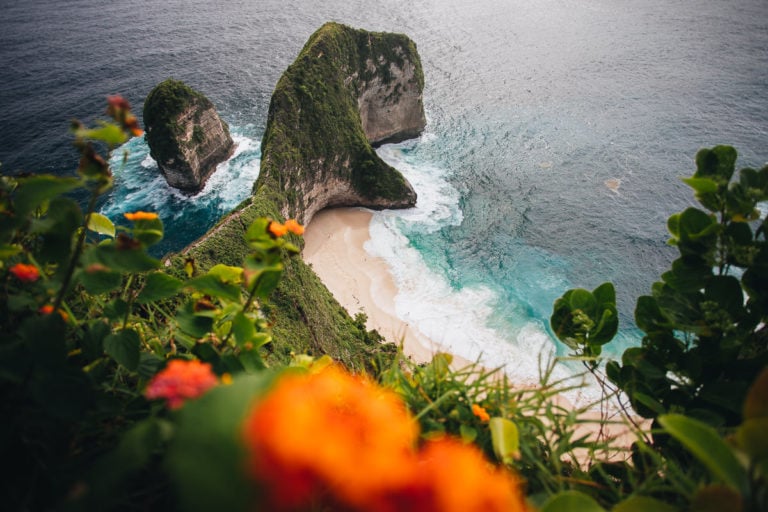
Kelingking’s T-rex-shaped cliff drops dramatically into turquoise water below. It really is like something out of a dream, and it’s one of those rare places that is even better in real life – pictures just don’t do it justice! The viewpoint alone is worth the visit, but if you’re feeling particularly adventurous, you can hike down to the beach. It’s one of the best things to do in Nusa Penida, and is an absolute must-see.
What to know before your visit:
- It’s about a 40 minute drive from Banjar Nyuh Harbor, and roads are pretty bumpy. If you’re driving yourself, Kelingking can be found on google maps and it’s signposted for most of the journey.
- It gets incredibly busy – aim to get there no later than 10:00 am if you want to beat the worst of the crowds.
- If you choose to hike down to the beach, the hike is steep, sandy, and physically demanding. Allow 1.5 – 2 hours for the round trip hike, and wear proper shoes – the ground is unstable in parts.
- It’s not recommended to swim in the water as currents are incredibly strong, and there are no lifeguards.
Stop 2: Broken Beach (Pasih Uug)
Just a half an hour’s drive away from Kelingking, you’ll find the next stop on this Nusa Penida Itinerary – Broken Beach. This coastal spot features a circular cliff formation with a natural archway. Waves surge in and out through the opening, creating a natural lagoon with crystal clear water.
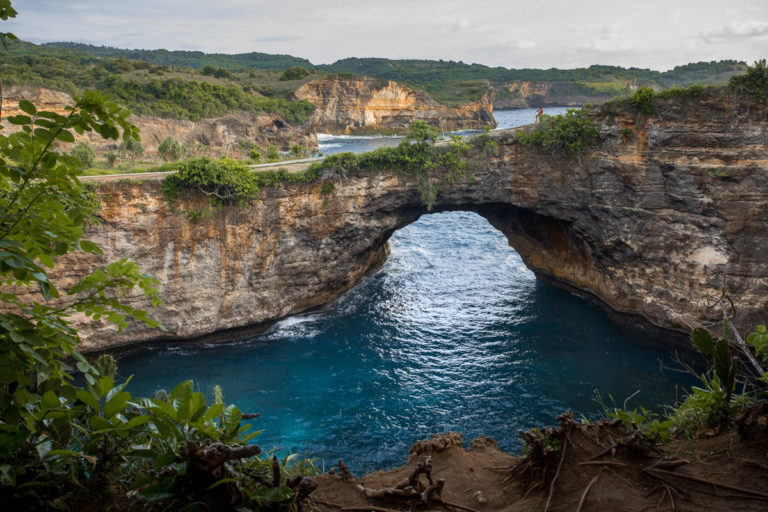
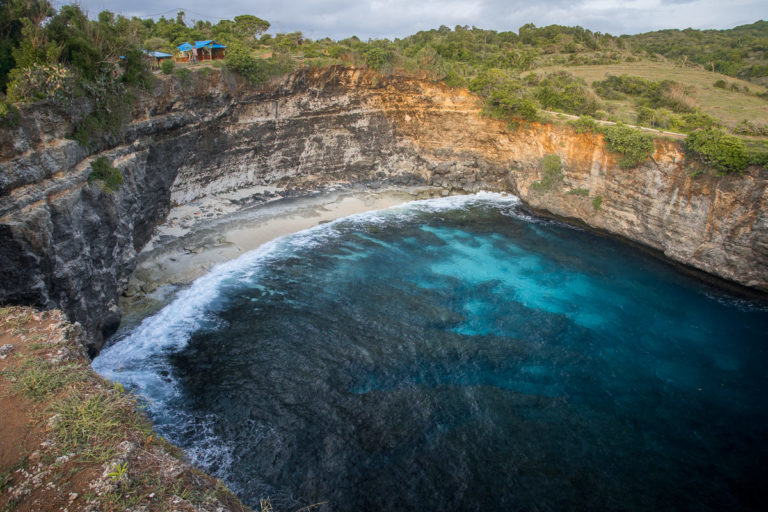
There’s no beach access here; instead, it’s all about the view… but it’s an easy stop nearby (with minimal walking, so is particularly welcomed after a hike down to Kelingking Beach!).
Tip: For a deeper breakdown of Nusa Penida beaches, check out our comprehensive guide.
Stop 3: Angel’s Billabong
Located next to Broken Beach, Angel’s Billabong is the next stop – it’s only a five minute walk between the two sites, so you can visit in whichever order you prefer.
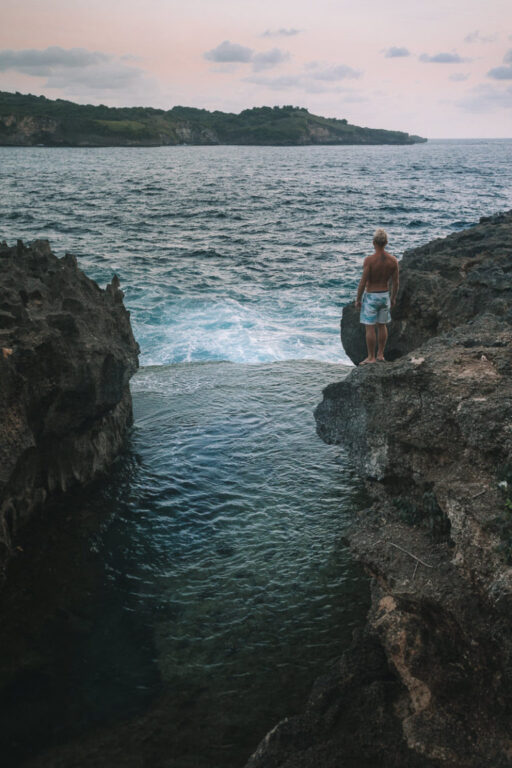
Angel’s Billabong is a volcanic rock inlet, and at low tide it’s transformed into a sparkling green natural infinity pool. It’s quite a sight to see – just beyond the edge of the pool waves crash fiercely against surrounding cliffs, creating a huge contrast with the stillness of the pool.
Some people enter the water to swim here; I personally advise against this. Currents around this area are incredibly powerful, and even at low tide, freak waves can appear out of nowhere and crash into the pool. These waves can – and do – sweep people out, and sadly a handful of fatalities have occurred here.
The pool appears at low tide, which is usually early morning – but check specific tide times online during your trip. If you visit at high tide, you won’t be able to see the infinity pool but it’s still a pretty cool stop – stand back and watch nature put on a show as waves pummel the cliffs, creating huge plumes of spray.
Evening: Crystal Bay Sunset
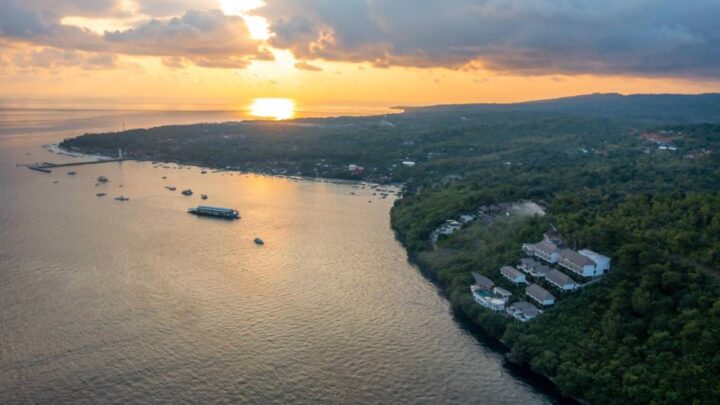
Crystal Bay is one of the few beaches on the island’s west side that is suitable for swimming. It’s also a popular sunset spot, and has a handful of warungs where you can grab local dishes and a nice cold drink to end the day.
Day 2 – East Nusa Penida Highlights
East Nusa Penida feels quieter, greener, and more spread out. The cliffs are just as dramatic, but the beaches are wider and the crowds thinner; most people visiting on a day trip opt for West Nusa, so you’ll have much more of this side of the island to yourself.
Stop 1: Diamond Beach
Diamond Beach is probably the highlight of the east side, and is an absolute must on any Nusa Penida itinerary. I’m lucky to have seen some pretty incredible views around the world, and Diamond Beach ranks highly as one of my favorites.
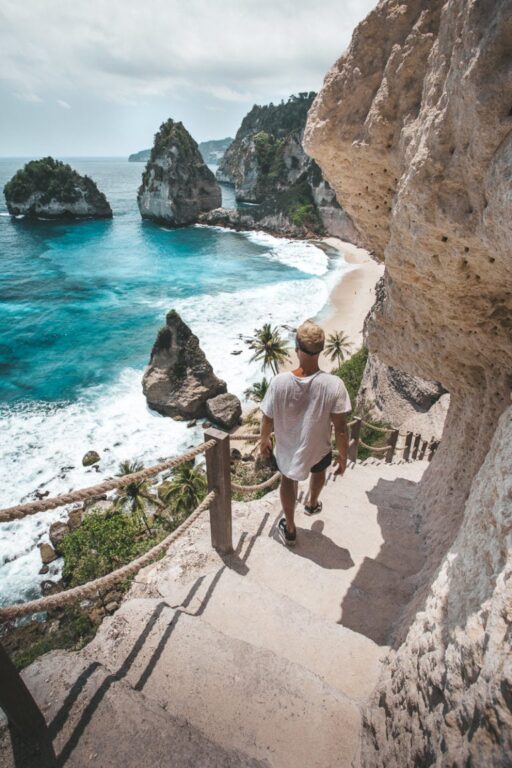
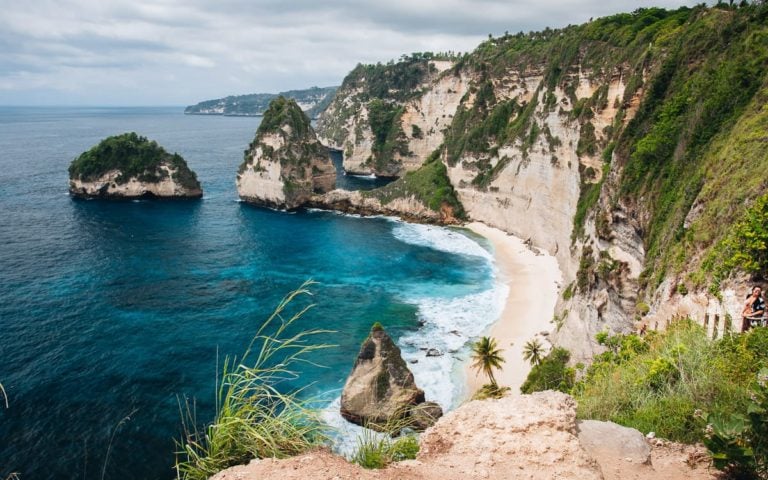
A steep staircase carved into the cliff leads down the brightest white sand beach, with the view framed by jagged limestone formations and a handful of palm trees. The water on the beach, in typical Nusa fashion, is sparkling blue in colour but wild and frothy when breaking on shore.
I’d advise making this your first stop of the day to avoid crowds, and heat – the stairs are steep and the trip back up is no fun in the midday sun! There are just under 200 steps, and they’re carved into natural limestone. While they’re more secure than the steps at Kelingking, I still recommend wearing proper shoes as they’re quite uneven.
Even if you don’t go down, the viewpoints from above are stunning. There’s a slightly hidden viewpoint just over a hill to the left of where the staircase starts, this is the spot to go for the best pictures.
Stop 2: Atuh Beach
Atuh Beach is right next door to Diamond Beach, and you’ll pay a combined entrance fee of around 35k IDR for both. Atuh is a much more sheltered beach and the water is usually calmer, so unlike Diamond Beach, you can swim here.
Atuh is another beautiful beach with rocky formations and natural arch just off shore. By Nusa Penidas standards, this is a pretty tranquil bay and it’s a great spot to relax. There are a few beanbags and sunloungers available to rent along the beach. It’s lined with numerous small warungs, so you can grab lunch here as well.
Stop 3: Rumah Pohon Tree House Viewpoint and Thousand Islands Viewpoint
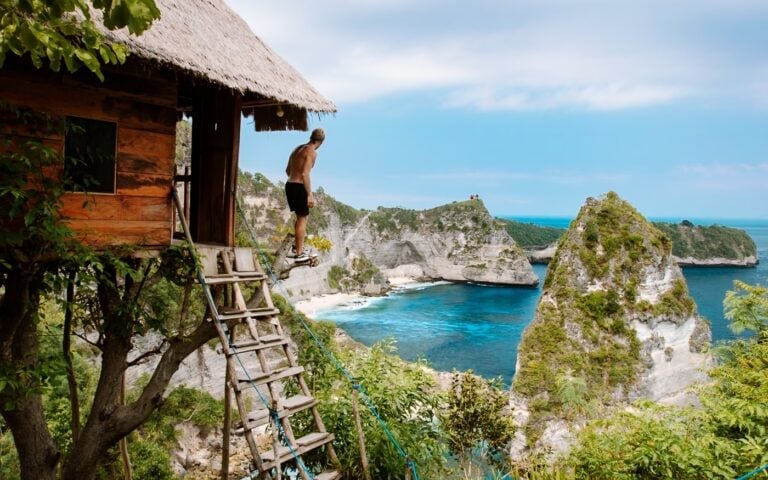
The famous Rumah Pohon (Indonesian for ‘tree house’) viewpoint offers epic views over the cliffs and ocean, and there are three little wooden treehouses scattered around cliffs here. Before Nusa started getting busier, you could rock up here and camp in one of the treehouses overnight – now you have to queue just to take a picture on the steps! It’s still possible to stay overnight, but you need to book on airbnb for around $35 USD.
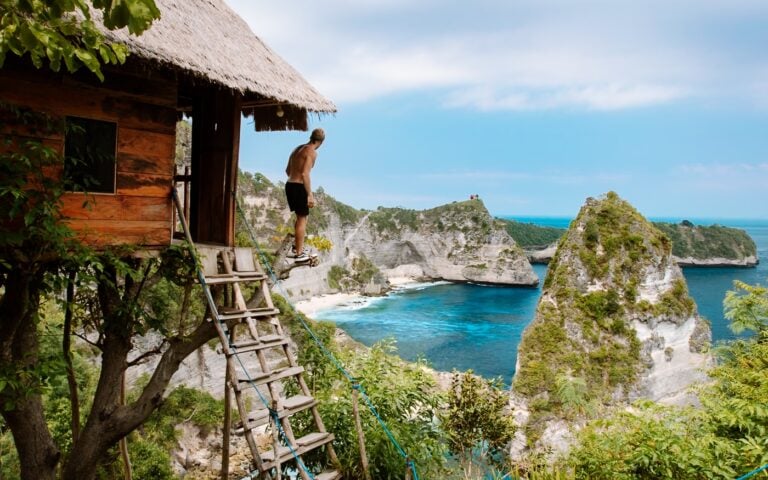
The treehouses are super charming and make for some pretty great instagram snaps – but I don’t think this is a must-visit unless you’re bothered about taking these specific pictures. When I first visited Nusa Penida I loved this spot as it felt so off the beaten track, but it’s lost that appeal now; I’ve read that some people are waiting over an hour in line to take a picture these days, and you have to pay $75k IDR for your turn. Not quite the secluded vibe it once had!
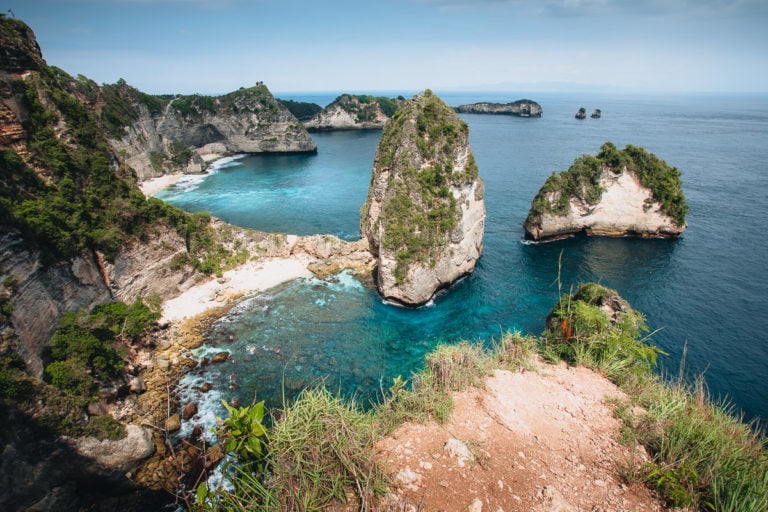
Luckily, you can get pretty similar views nearby (just without the actual tree houses). On the same plot of land, you’ll find the Thousand Islands Viewpoint. The view here is heralded as the best panorama on Nusa Penida, with views stretching out across the turquoise sea with numerous limestone rock formations and islets rising from it.
Day 3 – Snorkeling
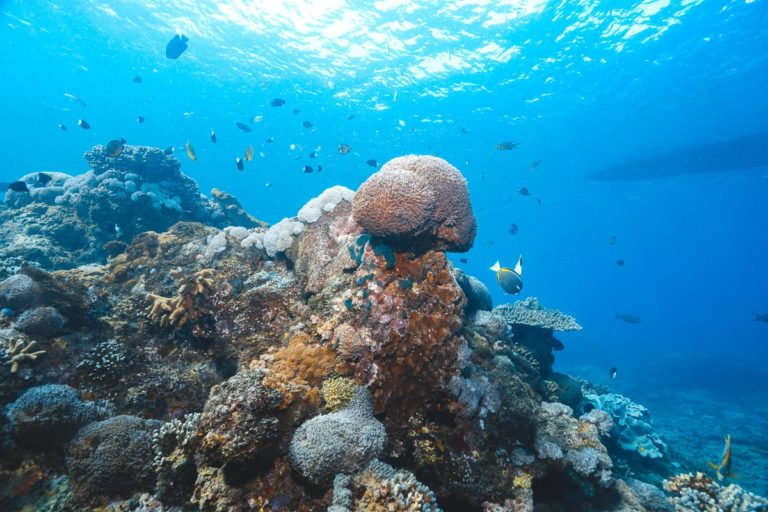
If you extend your trip to three days, you’ll have time to head out on the water in search of one of the things Nusa is most famous for – manta rays!
Nusa Penida is easily one of the best places in Bali to snorkel with manta rays. Visibility varies by season, but mantas are present year-round.
You have a few options when it comes to booking a snorkelling trip; you can join a half-day or full-day group tour, or a private boat trip depending on your budget. Most trips include stops at :
- Manta Point
- Crystal Bay
- Gamat Bay
Getting Around Nusa Penida
As Nusa is such a small island, there isn’t much flexibility when it comes to getting around. There are three main options for your trip
Scooter Rental
This is the cheapest option and provides the most flexibility; I love hiring a scooter in Nusa Penida as it allows you to take each day at your own pace. It’s also the most fun way to get around and really gives a sense of freedom which compliments Nusa’s rugged nature perfectly.
A scooter costs around 70 – 100k IDR per day. To avoid any hassle, it’s easiest to book your scooter at the port when you arrive for the duration of your trip, but you’ll also find scooter rental shops in any of the main accommodation areas.
Roads are steep, uneven, and sometimes muddy. This isn’t the place to try driving a scooter for the first time – I only recommend hiring a scooter for your Nusa Penida itinerary if you already have experience with driving scooters in Asia.
Private Driver
This is a safer and less stressful way to get around the island and is ideal if you’re not comfortable riding scooters. You still have the freedom of being able to choose your Nusa Penida itinerary (or going with a ready made itinerary like this one), but without the stress of the challenging road conditions.
It’s more expensive, and usually costs between 400 – 700k IDR per day. I think this is worth it for a short trip though; the local knowledge and stress-free experience you’ll have is worth paying for.
Drivers can be booked online, at the port when you arrive, or through your accommodation.
Best Time to Visit
Dry Season (April – October)
This is when you can expect the best weather and calmer sea conditions. Naturally this is also the busy season, with crowds peaking during July and August.
Wet Season (November – March)
During the wet season you’ll find fewer tourists and lush landscapes. However at this time of year you can expect slippery and sometimes dangerous road conditions, and the sea gets pretty rough so boats can often be cancelled.
Best months overall:
May, June, and September offer a balance of good weather and manageable crowds.
Where to Stay in Nusa Penida
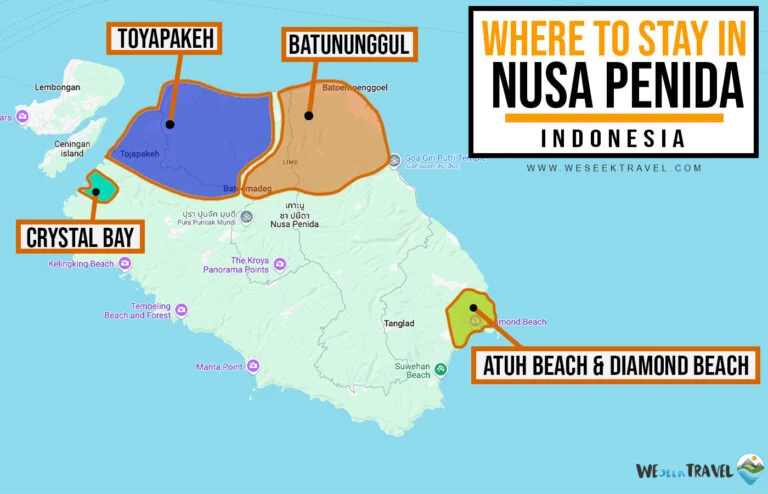
Most travelers visiting Nusa Penida stay in Toyapakeh – this is the most developed area of the island, and it’s close to the ferry port. You’ll find a range of accommodation to suit every budget here, as well as plenty of places to eat and drink.
If you want a quieter and more laid back stay, there are accommodation options in a few other areas on the island including Crystal Bay and Batununggul – both of these are a great choice for a more relaxed, nature-led atmosphere.
For a more detailed guide on where to stay in Nusa Penida, check out this post.
Practical Tips for Visiting Nusa Penida
- Wear proper footwear: Stairs and paths are often steep and uneven.
- Carry water and sun protection: Shops are sometimes limited near viewpoints, and the sun gets very intense at midday.
- Start your days early: Beat crowds and heat.
- Respect safety warnings: If a beach says swimming is prohibited, listen – currents are incredibly strong around the island and waves are unpredictable.
- Plan buffer time: Travel between spots takes longer than expected.
- Carry cash: There’s an entry fee to pay at most viewpoints, and usually you’ll need cash for these.